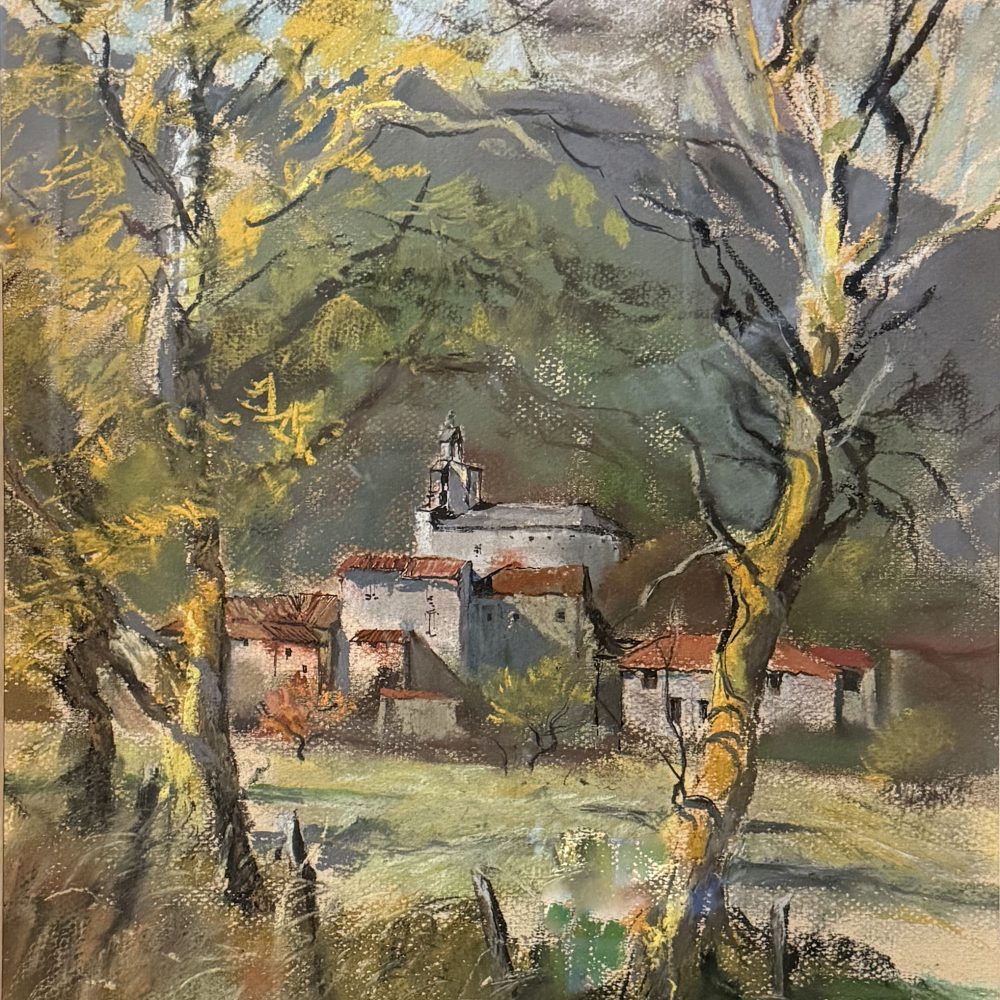

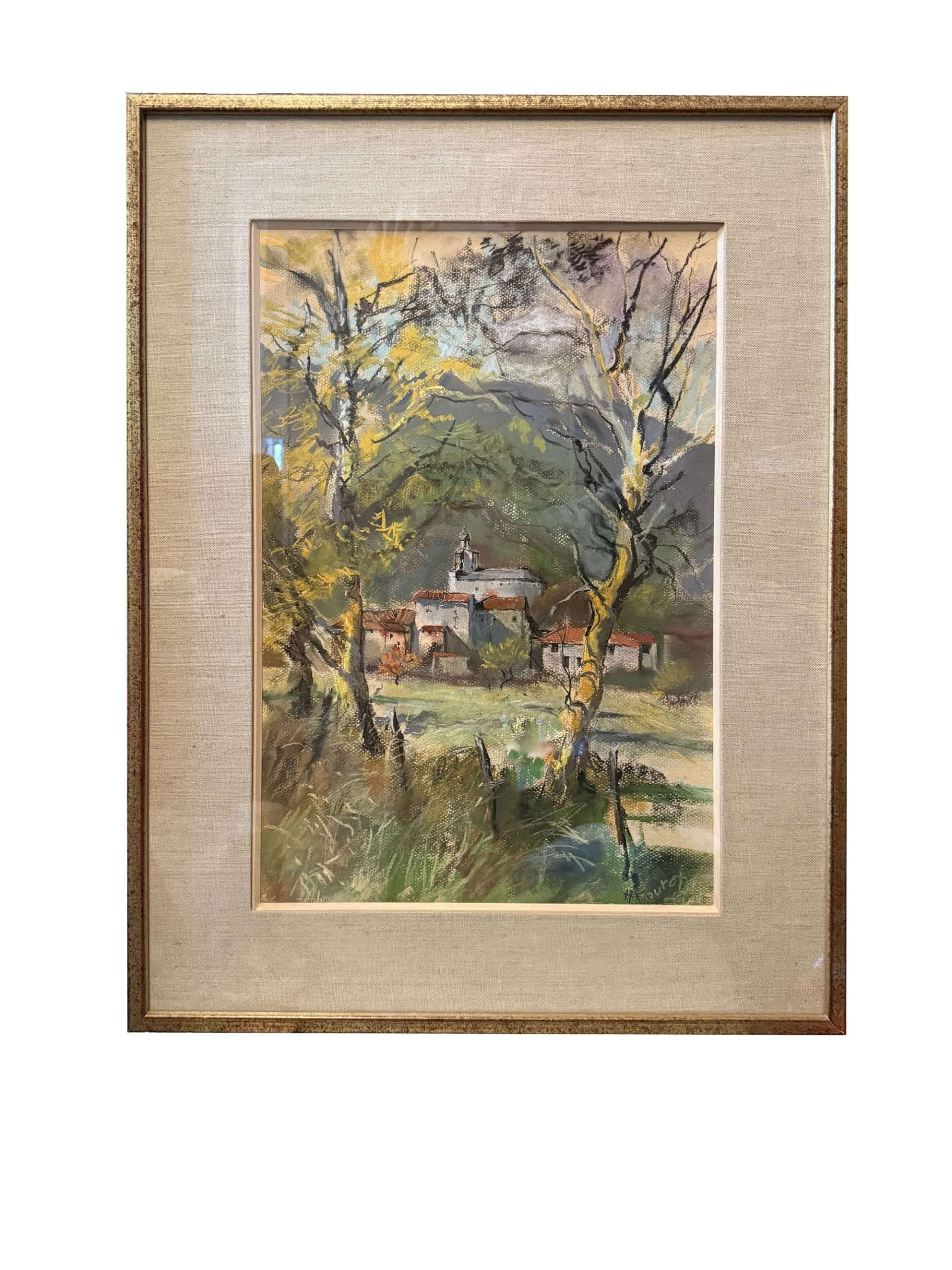
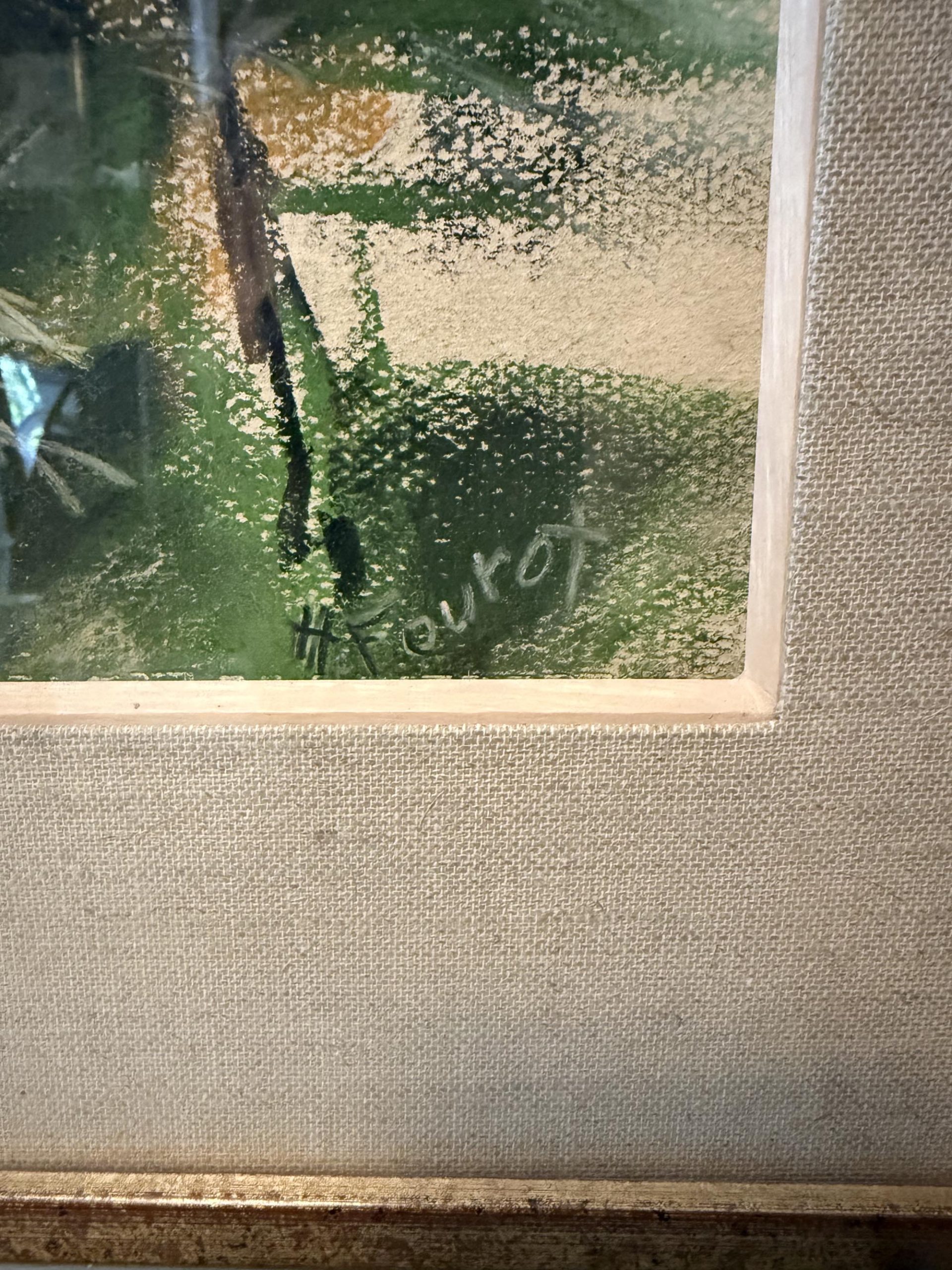
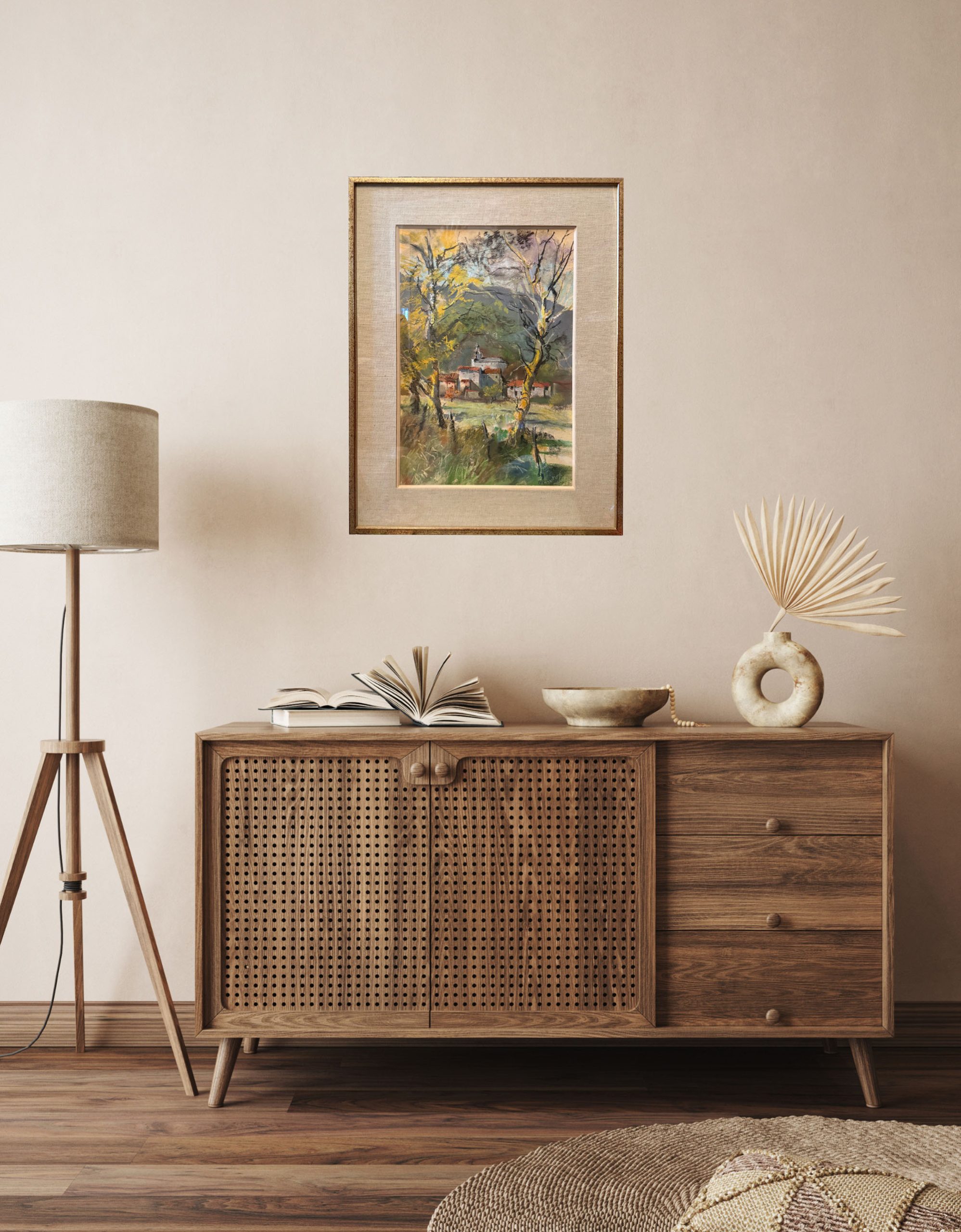

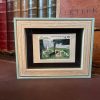
This evocative work by Henriette Fourot captures the quiet charm of a rural French village, nestled within the embrace of its natural surroundings. Executed in pastel and ink, the composition demonstrates the artist’s characteristic balance of atmospheric softness and structural precision.
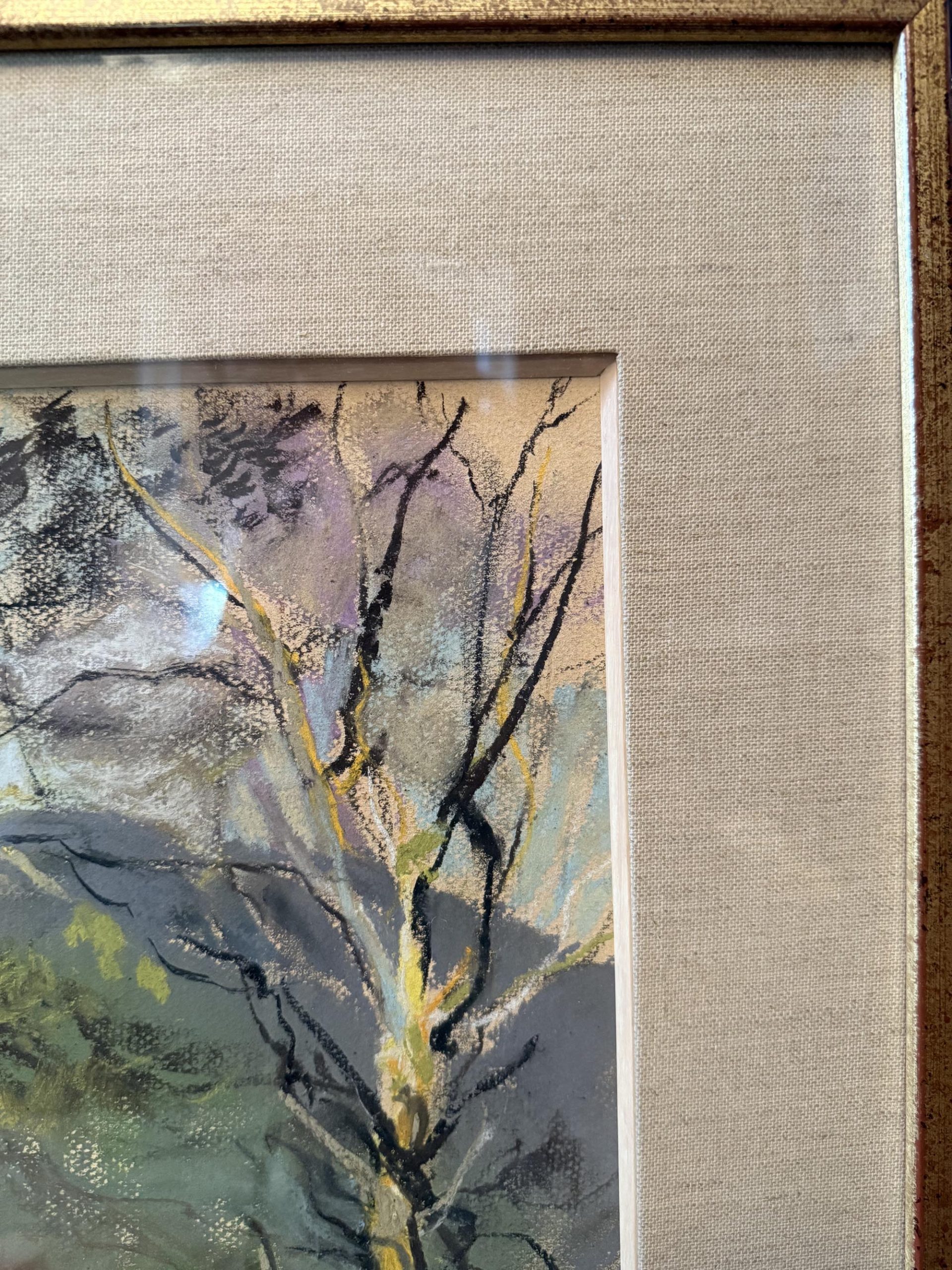
The scene is framed by tall, expressive trees in the foreground, their trunks highlighted in golden tones and their branches arching protectively over the view. Beyond lies a cluster of pale stone buildings with red-tiled roofs, dominated by the slender steeple of a village church, a recurring motif in Fourot’s oeuvre. The architecture emerges harmoniously from the landscape, evoking the timeless rhythm of provincial life.
Fourot’s technique blends gestural ink outlines with the luminous depth of pastel, allowing her to define architectural forms while rendering the surrounding foliage, grasses, and sky with impressionistic vibrancy. The interplay of yellows, greens, and soft violets suggests the shifting light of early autumn, bathing the scene in a gentle, nostalgic glow.
Rooted in the French regionalist tradition, Fourot’s landscapes reflect both the influence of Impressionist explorations of light and the enduring heritage of French pastelists. Rather than striving for strict realism, she conveys a poetic impression of place — a meditation on memory, tradition, and the enduring beauty of rural France.
Provenance:
Private collection, France.
Exhibited:
Possibly shown in regional salons and group exhibitions in southern France during the mid-20th century, in keeping with Fourot’s documented exhibition activity.