



About the Author:
Jean-Pierre Cros-Mayrevieille (1810–1876) was a notable French historian and archaeologist, deeply involved in the preservation of medieval architecture, especially the Cité de Carcassonne, which he helped save from ruin in the 19th century. He worked closely with architect Viollet-le-Duc, who famously restored the fortified city.
Content Overview:
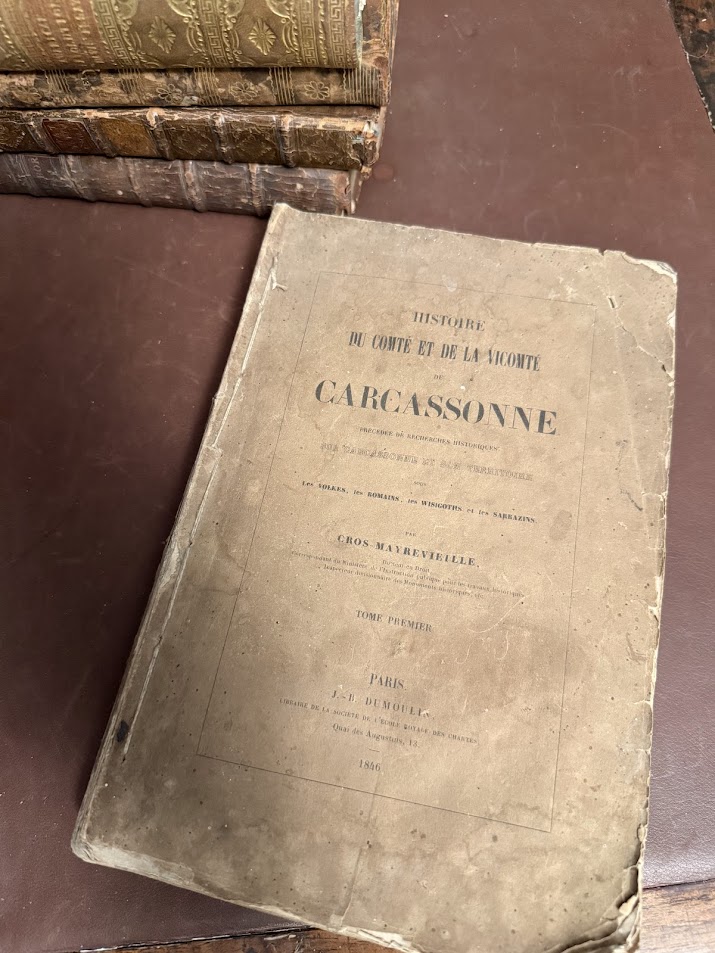
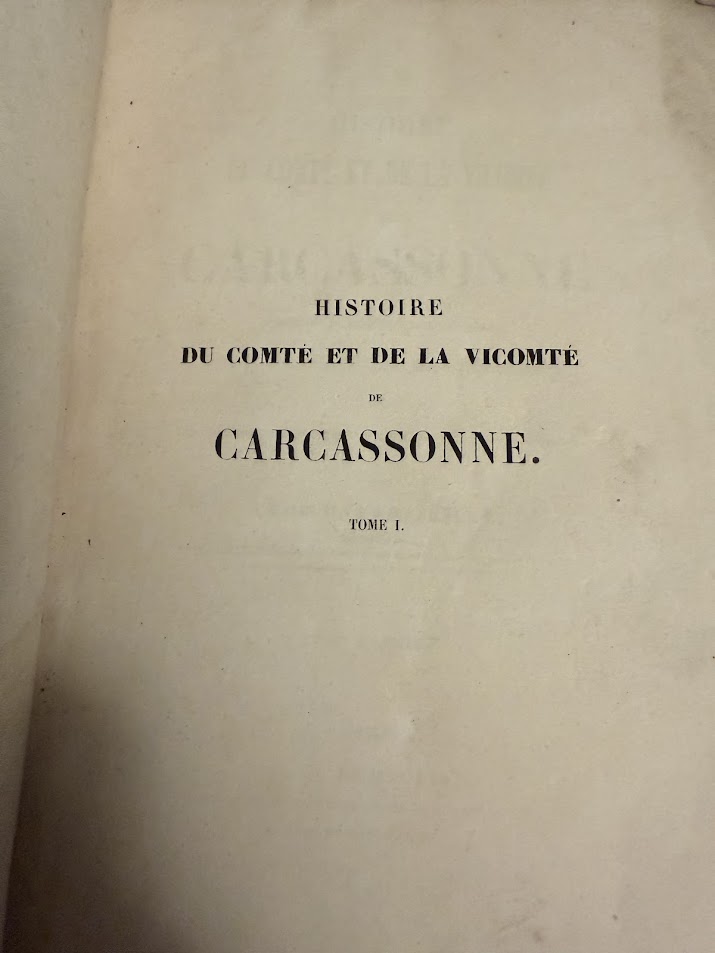
The full title of the book can be translated as:
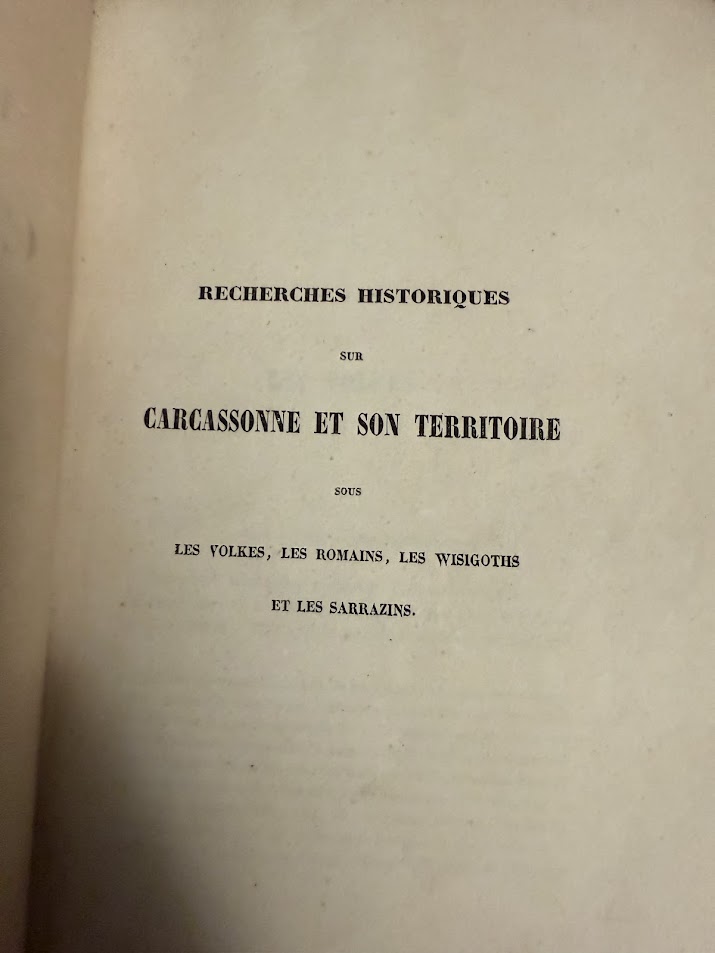
“History of the County and Viscounty of Carcassonne, preceded by historical research on Carcassonne and its territory under the Volcae, the Romans, the Visigoths, and the Saracens.”
This indicates the book is divided into two tomes:
-
Ancient History and Pre-Feudal Carcassonne:
-
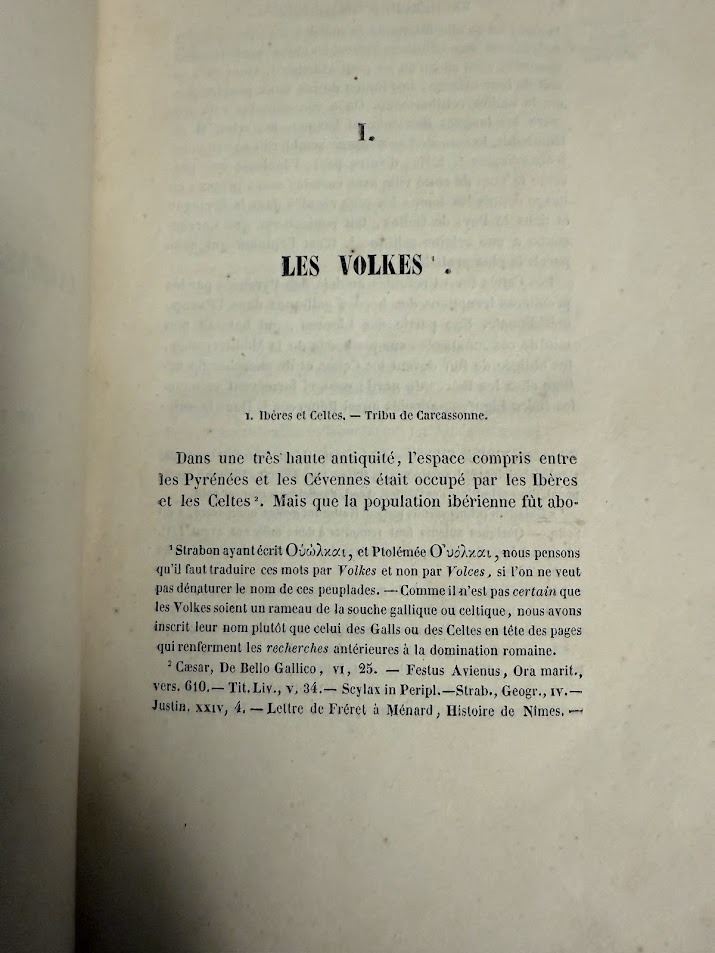
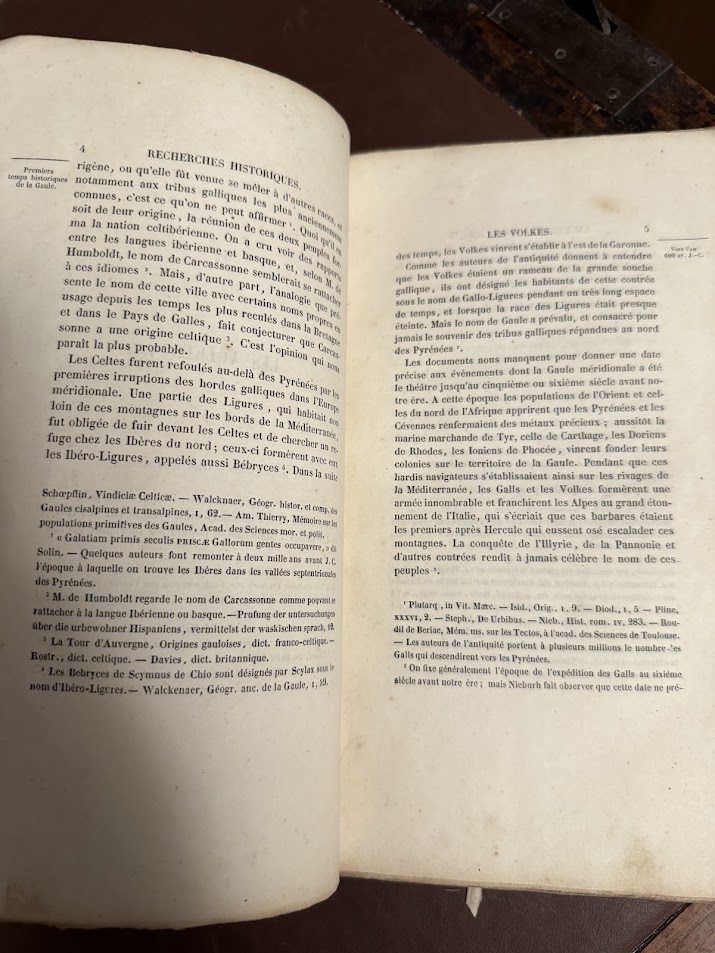
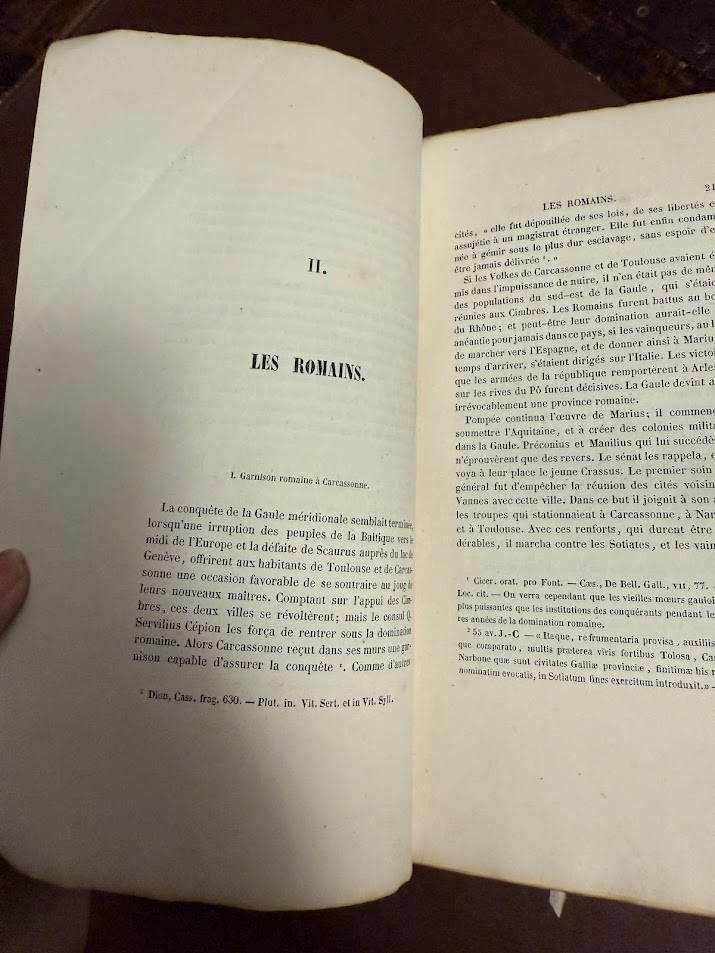
The first section dives into prehistoric and classical antiquity, covering the region’s early inhabitants such as the Volcae Tectosages (a Gallic tribe), then transitions to the Roman period, followed by the Visigothic kingdom, and then the Muslim/Saracen presence in the early 8th century.
-
This section provides valuable insight into the strategic importance of Carcassonne through the centuries, owing to its location between the Mediterranean and the Pyrenees.
-
-
Medieval and Feudal History:
-
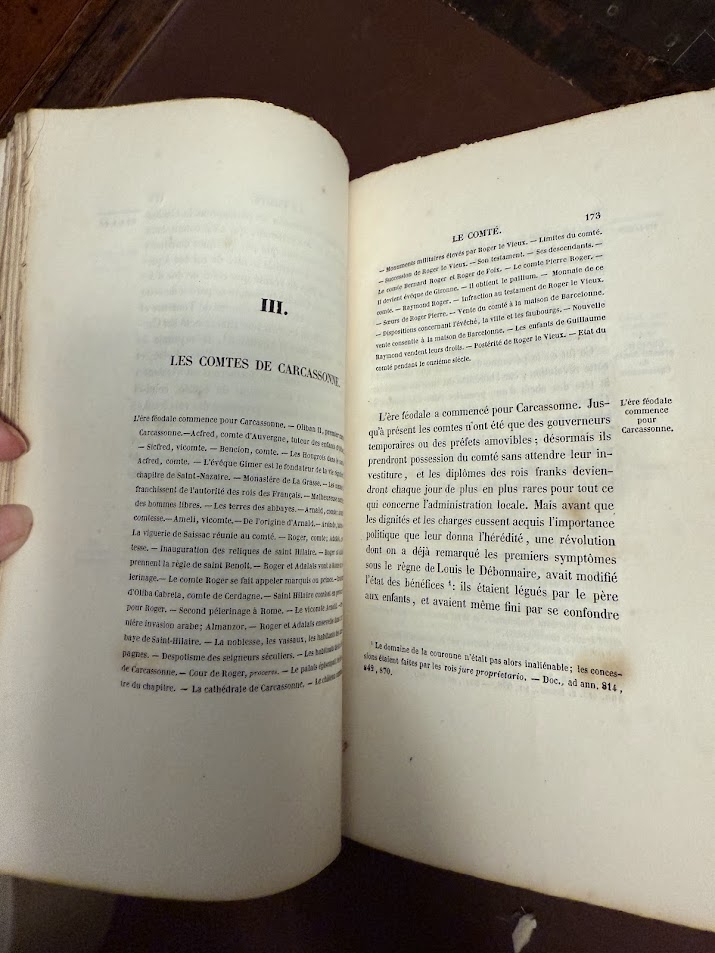
The second tome focuses on the formation of the County and later the Viscounty of Carcassonne.
-
It details the power struggles, succession of noble families, and integration into the French Crown, especially in the context of the Albigensian Crusade, where Carcassonne played a central role.
-
The text draws heavily from primary sources, including charters, royal edicts, and chronicles, making it a serious scholarly work for its time.
-
Why It’s Important:
-
This book was one of the first scholarly attempts to trace the complete history of Carcassonne, from antiquity to the medieval period.
-
It reflects 19th-century historiographical methods, combining narrative history with archival research.
-
It’s a key reference for anyone studying Occitan history, the Cathars, or medieval Languedoc.