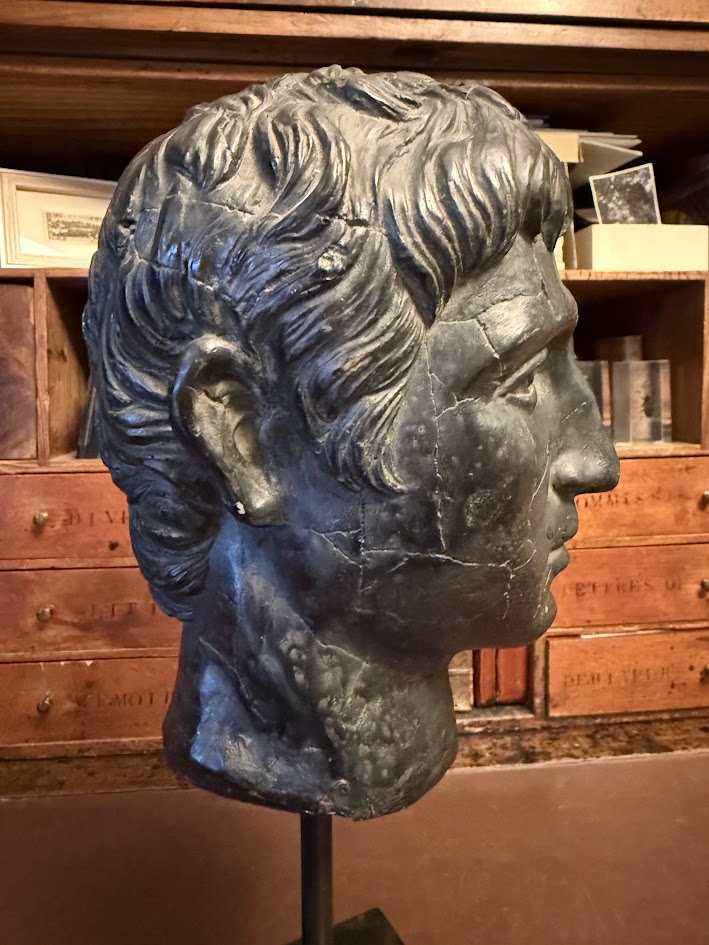
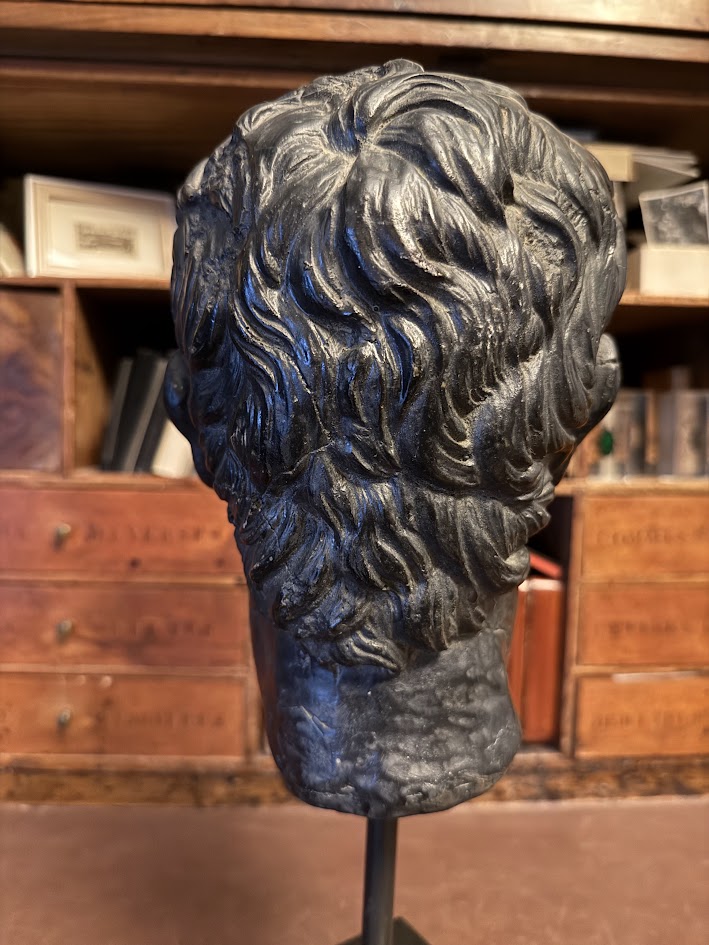
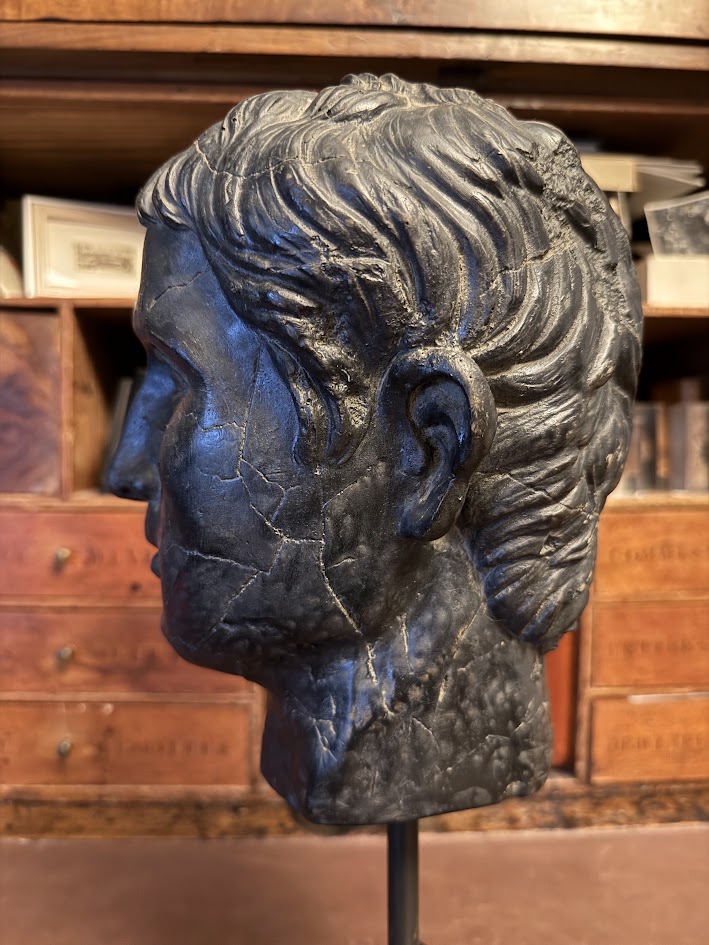
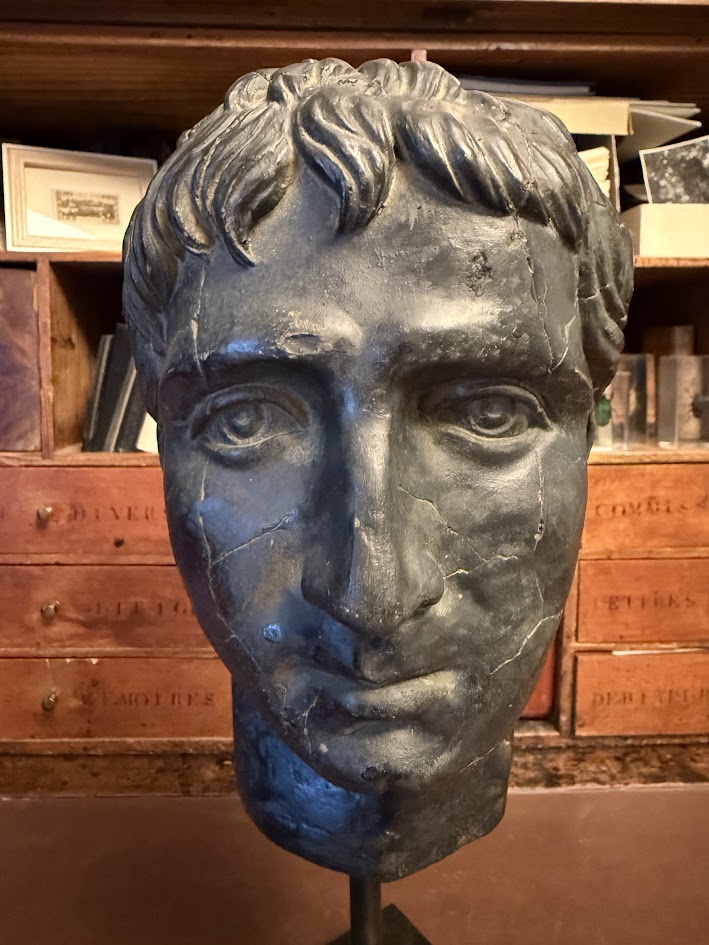
Historical Context & Craftsmanship
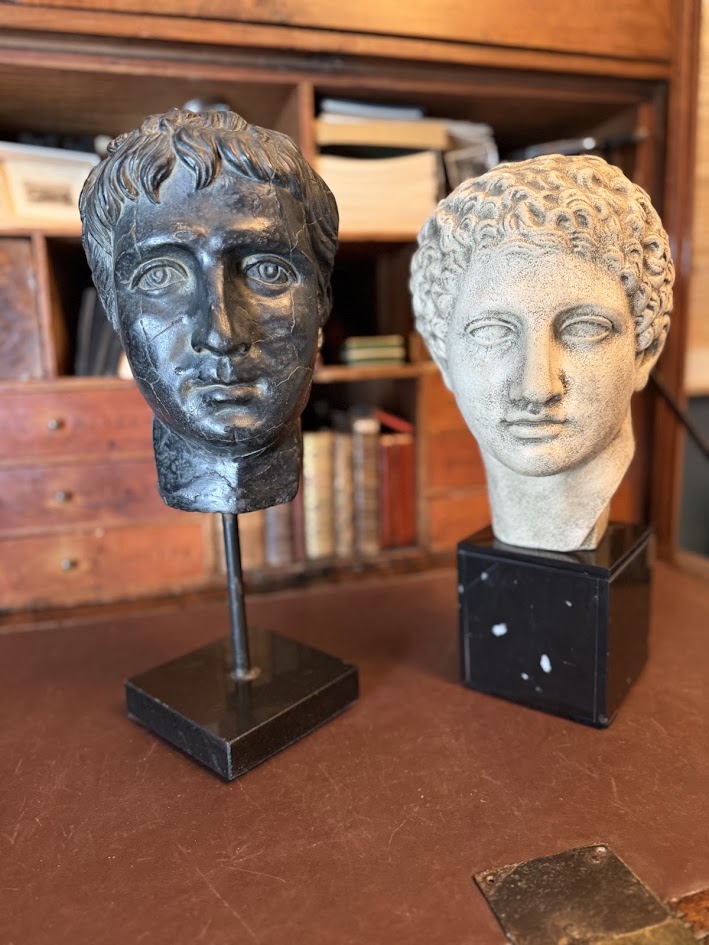
From the 19th century through the mid-20th century, official museum casting workshops – such as the Atelier de Moulage du Musée du Louvre in Paris, the Gipsformerei in Berlin, and P.P. Caproni & Brother in Boston – produced plaster reproductions directly from molds taken from ancient masterpieces.
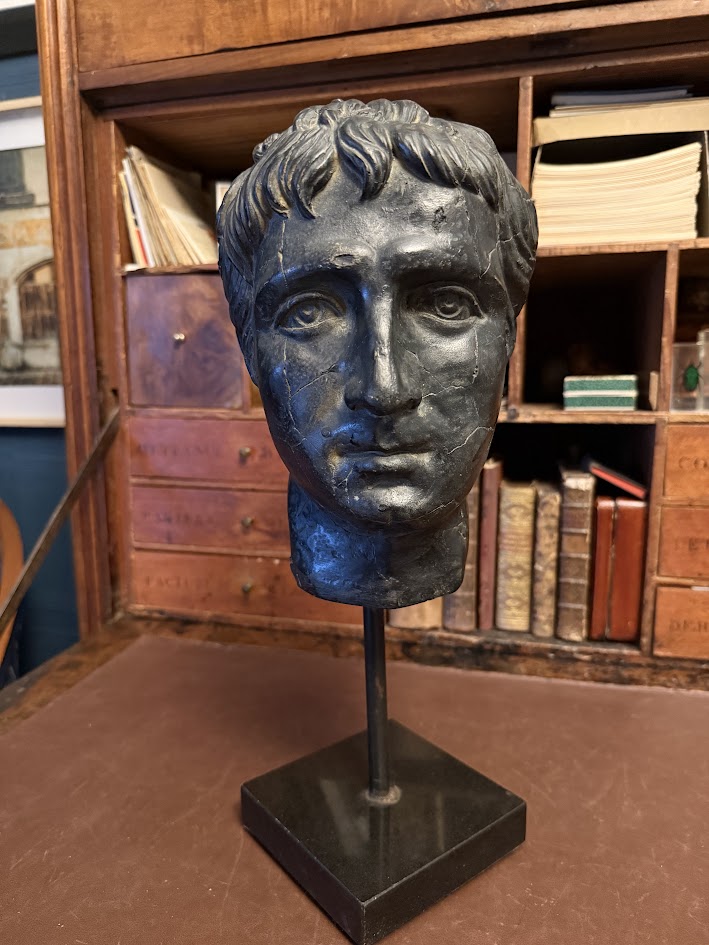
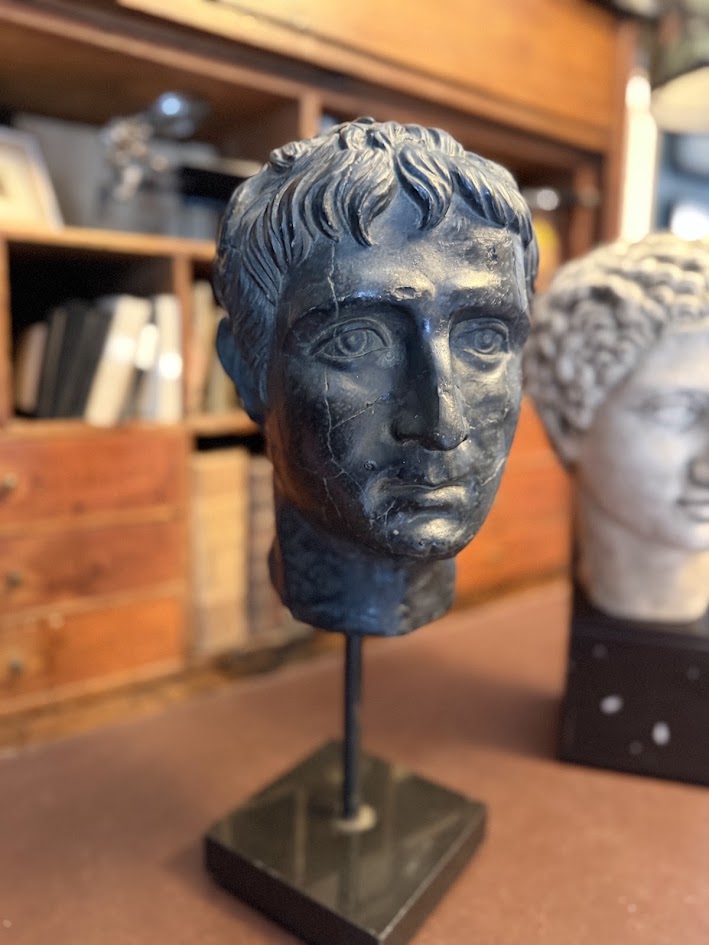
Because plaster emerges from the mold stark white, master artisans hand-applied dark wax, bitumen, or oil-paint patinas (patine bronzée or basalt finish) to disguise the raw plaster. This multi-layered finishing process simulated the deep carved black basalt stone, making plaster casts highly prized fixtures of aristocratic Grand Tour collections and academic art studios.