
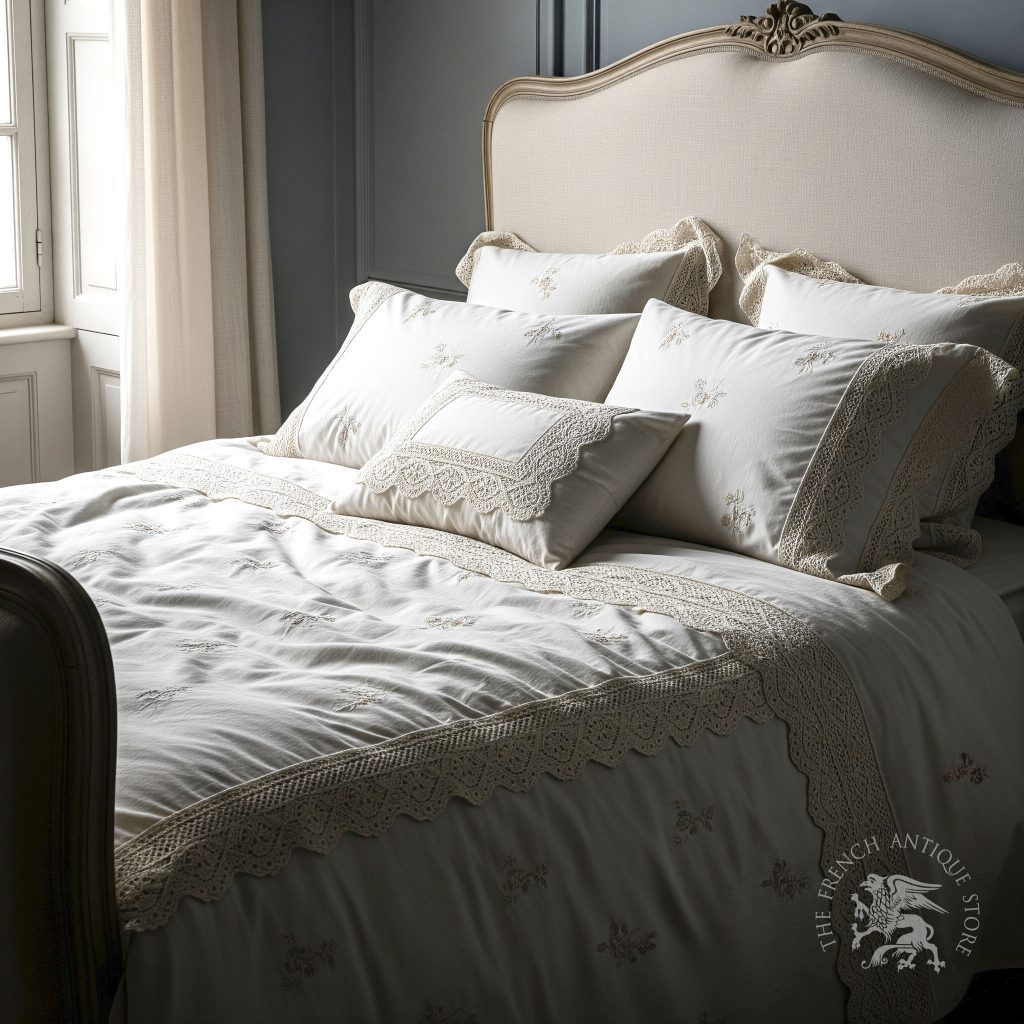
There’s something uniquely captivating about antique French bed linen. More than just fabric, these pieces whisper tales of bygone eras, embodying an exquisite blend of quality, durability, and often, breathtaking artistry. If you’re a lover of vintage textiles, a connoisseur of fine French living, or simply seeking to elevate your home decor with authentic, sustainable beauty, understanding the rich heritage of French linen sheets and vintage French textiles is a journey worth taking.
From Flax Fields to Family Heirlooms: A Rich Tapestry of History
The story of French bed linen stretches back millennia. Linen, derived from the humble flax plant, is one of humanity’s most ancient textiles. While its roots are global, France truly elevated its production. Imagine Charlemagne, way back in 789 AD, decreeing that every household must cultivate flax and weave their own linen! This centuries-old tradition of home production for everything from clothing to French bedding was the norm, particularly rural France, right up until the 18th century.
French artisans became renowned for their linen. While the industry faced challenges, particularly during periods of religious persecution that drove many skilled Protestant artisans out of France, the legacy of quality persisted, influencing regions like Belgian Flanders.
Then came the Industrial Revolution. By the mid-19th century, cotton, cheaper and easier to mass-produce, began to eclipse linen. Yet, this shift inadvertently preserved many of the earlier, exquisite handwoven linen pieces as precious family assets.
Perhaps the most poignant aspect of antique French bed linen is its connection to the “trousseau” or dowry. Picture young women, meticulously preparing a lifetime’s worth of linens, often hand-monogrammed with their initials – a visible symbol of family prosperity and a heartfelt contribution to their new marital home. This tradition continued through the 19th century, making monogrammed French linen a highly sought-after collectible today.
The Fibers of French Heritage: More Than Just Linen
When you’re searching for authentic French linen, you’ll encounter a fascinating array of natural fibers, each with its own character:
- Pure Linen (Lin Pur): The undisputed king. Vintage French linen sheets are prized for their strength, smooth hand, and incredible ability to soften with every wash, becoming almost liquid to the touch. It’s naturally breathable, perfect for any climate. Don’t be surprised if older pieces have a warm, unbleached cream hue.
- Hemp (Chanvre): Often dubbed the “linen of the common people,” hemp was robustly cultivated by farming families. Antique hemp sheets often reveal a distinctive, slightly “stringy” weave and a more earthy aroma. Because families used smaller looms, you’ll frequently find a charming hand-stitched central seam where two panels were joined – a tell-tale sign of true age and authenticity. Hemp’s durability is legendary, and it develops a rich texture over time.
- Métis: A brilliant early 20th-century innovation, métis is a blend of cotton and linen (at least 45% linen). It combines linen’s hard-wearing qualities with cotton’s affordability. Look for machine-embroidered ladder stitching along the hem and sometimes a “Toile de Métis” stamp on the selvage – a fantastic option for French bedding that balances durability and softness.
- Cotton: While less prevalent in the very oldest pieces, cotton gained popularity in the 20th century. Vintage cotton sheets offer a smooth, classic finish.
Beyond sheets, you’ll discover other treasures like antique French pillowcases (taies d’oreiller), bolster shams (taies de traversin), and stunning bedspreads. Look out for “boutis,” the exquisitely quilted cotton bedspreads from Southern France, or “couvertures,” thicker, handwoven blankets often made of wool or a linen/cotton blend.
Unearthing the Real Deal: How to Spot Authentic Antique French Linen
Ready to start your own collection of collectible French linen? Here’s what to look for:
- Monograms are Your Map: Hand-embroidered monograms are the most obvious clue. These delicate initials (often an intertwined ‘M’ for Monsieur and ‘Mme’ for Madame, or the couple’s first names) speak volumes about the piece’s history. The quality of the embroidery often reflects the skill and status of the original owner.
- The Mark of the Hand: Stitched Seams: A dead giveaway for truly antique pieces, especially those pre-1930s, is a hand-stitched central seam on wider sheets. This is where two narrower hand-woven panels were joined – a beautiful testament to manual craftsmanship before wide machine looms became standard.
- The “Hand” of the Fabric: Touch it! Genuine antique linen has an unmistakable feel. It starts crisp but, with years of use and washing, becomes wonderfully supple and fluid. Hemp will feel a bit more rustic.
- Embrace Imperfections: Don’t shy away from minor irregularities in the weave, slight variations in thickness, or a charming “patina” of age. These are signs of authenticity. A little fading, a small mend, or a faint age spot tells a story. Be wary of anything “too perfect” if it claims extreme age.
- Weight Matters: Antique linens vary widely, from ethereal and fine to gloriously heavy and substantial, depending on their original purpose.
- That “Old Linen” Scent: A very subtle, natural, earthy scent can sometimes accompany truly old pieces – a hallmark of natural fibers stored for decades.
Preserving Your Treasure: Caring for Antique French Bed Linen
These pieces have survived generations for a reason – they’re incredibly durable! But a little TLC goes a long way in preserving your vintage French linen:
- Washing Wisdom: Most pieces can be machine washed on a warm, gentle cycle. Opt for natural, mild detergents like authentic Savon de Marseille. Steer clear of harsh bleaches or optical brighteners, which can weaken fibers and alter colors. For delicate lace or intricate embroidery, a gentle hand wash is best. Ensure a thorough rinse.
- The Power of the Sun: Line drying is your linen’s best friend! The sun not only whitens naturally but also leaves your linen smelling incredibly fresh. Avoid high-heat tumble drying, which can be harsh on fibers. If you must use a dryer, choose the lowest heat setting.
- Ironing (or Not!): Many love the relaxed, naturally creased look of linen. If you prefer a crisp finish, use a steam iron on a hot setting. To protect delicate embroidery, iron it from the reverse side. For large sheets, fold them into four thicknesses and iron in sections.
- Clever Storage: Store your antique linen sheets in a cool, dry, and well-ventilated space, away from direct sunlight. Never use plastic bags, as linen needs to breathe. Fold flat with as few creases as possible, or for very large or fragile items, consider rolling them around an acid-free tube. Rotate how you fold them periodically to prevent permanent crease lines. A sachet of dried lavender can add a lovely scent and deter pests.
- Embrace Minor Flaws: Small rust spots from storage or faint fold lines are common on very old pieces. If you’re comfortable, some gentle rust removers (or a lemon juice and salt paste in sunlight for specific spots) can help. Small tears can be mended by a skilled hand, adding to the piece’s narrative.
Bringing antique French bed linen into your home is more than just acquiring a possession; it’s adopting a piece of history. Each sheet, each pillowcase, tells a silent story of generations past. It’s an investment in sustainable beauty, a testament to enduring craftsmanship, and a touch of that timeless French elegance for your everyday life.
No products were found matching your selection.
